Compare PHP vs IOP for depression, including treatment intensity, scheduling, costs, and symptom severity to help determine the right level of care.

Depression affects everyone differently. Some people can continue managing work, school, or family responsibilities while receiving treatment. Others may struggle to get through daily life without more intensive support. Because depression exists on a spectrum, treatment programs are designed to meet people where they are in recovery. Two common options are Partial Hospitalization Programs (PHP) and Intensive Outpatient Programs (IOP). Both provide structured mental health treatment without requiring overnight hospitalization, but they differ in intensity, scheduling, and level of support.
Understanding the difference between PHP vs IOP for depression can help you or a loved one choose the right level of care based on symptoms, safety concerns, and daily functioning.
A Partial Hospitalization Program (PHP) is one of the highest levels of outpatient care available for depression treatment. It offers structured, full-day support for individuals who need intensive mental health care but do not require 24-hour hospitalization. PHP is often recommended for people experiencing severe depression symptoms that interfere with daily functioning.
PHP programs typically run 5–6 days weekly for several hours each day. Many people attend treatment during the day and return home in the evening.
Treatment is highly structured and may include:
Because of the time commitment, PHP often functions similarly to full-time treatment without requiring an overnight stay.
PHP treatment for depression commonly includes evidence-based therapies such as:
These therapies help individuals better understand depressive thought patterns, regulate emotions, and develop healthier coping strategies.
PHP may be appropriate for individuals experiencing:
For many people, PHP acts as a stabilization step between inpatient care and independent daily life.
An Intensive Outpatient Program (IOP) provides structured mental health treatment with more flexibility than PHP. It allows individuals to continue receiving therapy and support while maintaining parts of their normal routine. IOP is often recommended for people with mild-to-moderate depression symptoms or those transitioning from higher levels of care.
IOP programs usually meet 3–5 days weekly for a few hours per session. Many programs offer morning or evening scheduling to accommodate work, school, or family obligations. Compared to PHP, IOP provides more flexibility while still offering consistent therapeutic support.
IOP treatment may include:
Treatment focuses on helping individuals apply coping tools in real-life situations while continuing their daily responsibilities.
IOP may benefit people who:
For many individuals, IOP provides a balance between flexibility and consistent mental health care.
While both programs treat depression, the biggest difference between PHP and IOP is the level of intensity and support provided.
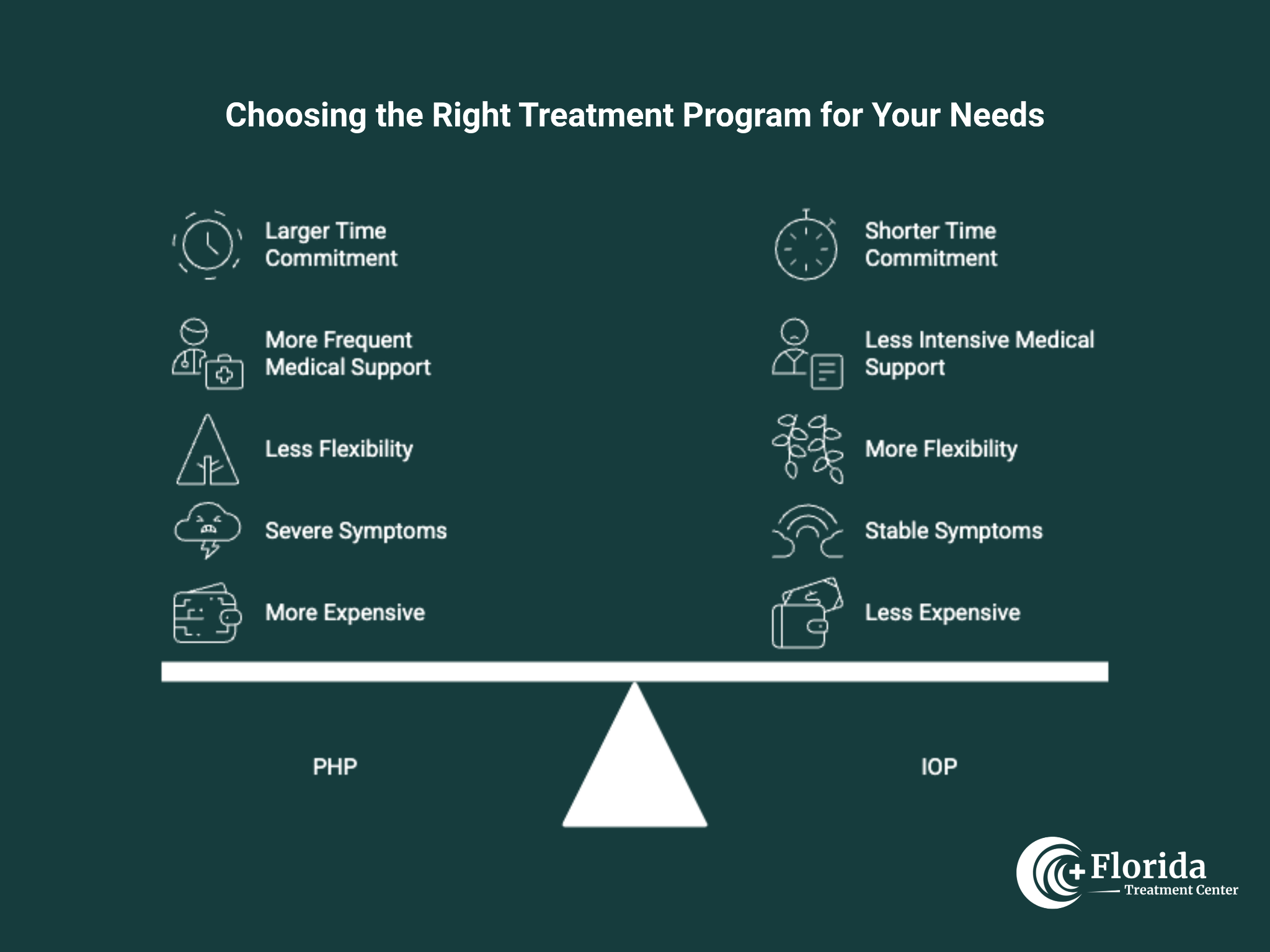
PHP requires a much larger time commitment. Most programs involve full-day treatment several days per week. IOP sessions are shorter and designed to fit more easily around daily responsibilities.
PHP typically includes more frequent psychiatric care and medication monitoring. Individuals may meet regularly with psychiatrists or clinical staff throughout the week. IOP still provides professional support, but medical oversight is generally less intensive.
IOP offers more flexibility for people who need to continue working, attending school, or caring for family members. PHP is more structured and may temporarily limit outside responsibilities during treatment.
PHP is generally recommended for severe depression symptoms that significantly affect daily functioning. IOP is often appropriate for individuals who are stable enough to manage daily life with additional therapeutic support.
Because PHP involves more treatment hours and clinical oversight, it is often more expensive than IOP. However, many insurance providers cover both levels of care when medically necessary.
Coverage varies depending on:
Many treatment centers offer insurance verification to help patients understand their options before starting care.
Some signs may indicate that a higher level of support is needed.
PHP may be more appropriate if depression is causing:
If symptoms are becoming difficult to manage independently, a more structured treatment environment may help provide stabilization and consistent support.
IOP may be a good fit for individuals who:
Many people choose IOP because it allows them to continue building recovery skills while remaining connected to everyday life.
Recovery from depression is not always linear. Someone may begin treatment in PHP and later transition into IOP as symptoms improve. This step-down approach creates a continuum of care that allows support to gradually adjust as stability increases.
For example:
Gradually reducing treatment intensity can help individuals maintain progress and lower the risk of relapse.
At Florida Treatment Center, depression treatment is tailored to each individual’s needs. Treatment plans may include structured outpatient care, therapy, psychiatric support, and personalized recovery planning. Whether someone needs the intensive structure of PHP or the flexibility of IOP, the goal is to provide compassionate mental health support in a safe and supportive environment. Insurance verification options are available to help individuals explore treatment coverage and next steps.
Not necessarily. The most effective program depends on symptom severity, safety concerns, and daily functioning. PHP is typically better for severe depression requiring intensive support, while IOP may work well for moderate symptoms and ongoing recovery support.
Yes. Many people continue working or attending school during IOP because sessions are often scheduled in the morning or evening. PHP is usually more difficult to balance with a full-time schedule due to its higher time commitment.
Many insurance providers cover PHP and IOP treatment when medically necessary. Coverage depends on the insurance plan, diagnosis, and recommended level of care.
Treatment length varies based on individual needs and progress. PHP programs often last several weeks, while IOP may continue longer as individuals transition toward independent outpatient care.
Stay informed about the latest research in psychology.

Learn how PHP for depression provides structured daytime treatment, therapy, and psychiatric support without inpatient hospitalization.
.jpg)
Find LGBTQIA therapists in Tampa who understand identity, trauma, and addiction. Florida Treatment Center offers specialized dual diagnosis treatment.
Find hope in scriptures during addiction recovery. Discover powerful Bible verses for strength and healing compiled by Florida Treatment Center.